from 0 review
10 Days 9 Nights
Daily Tour
Unlimited
Any Preferred Language
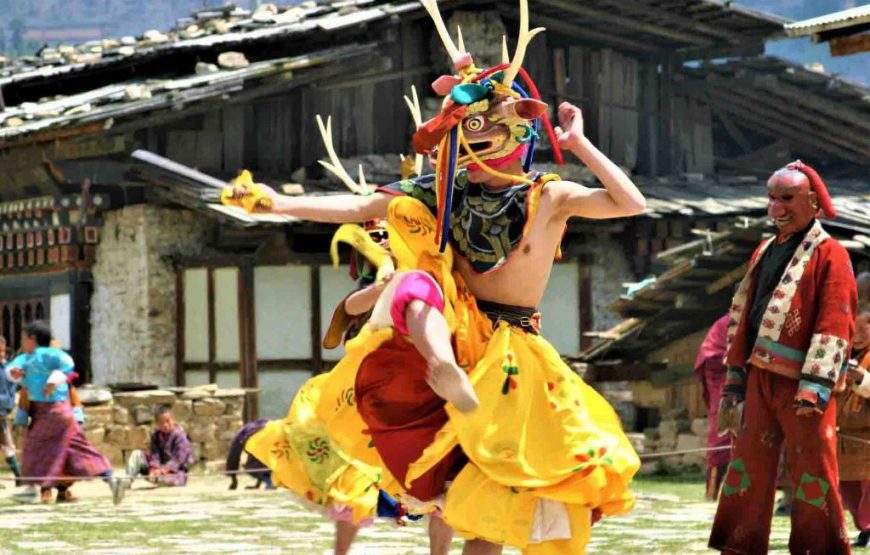
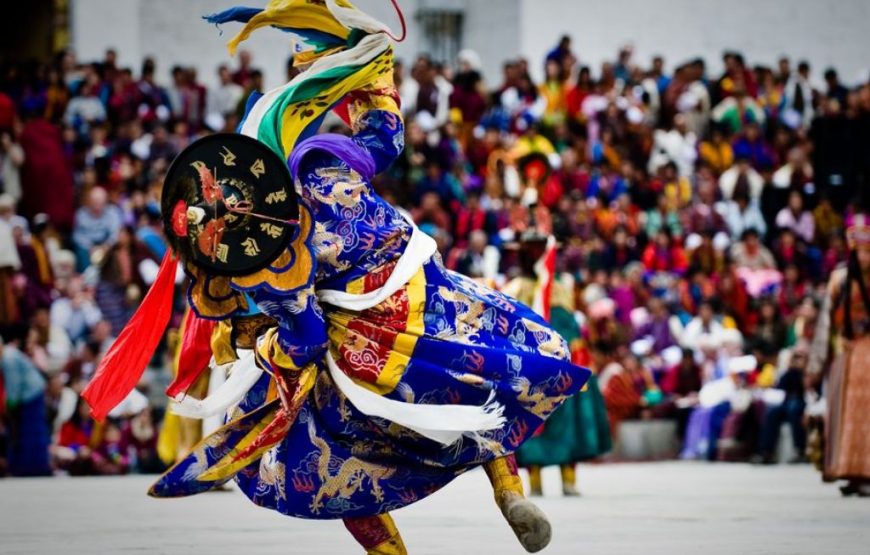
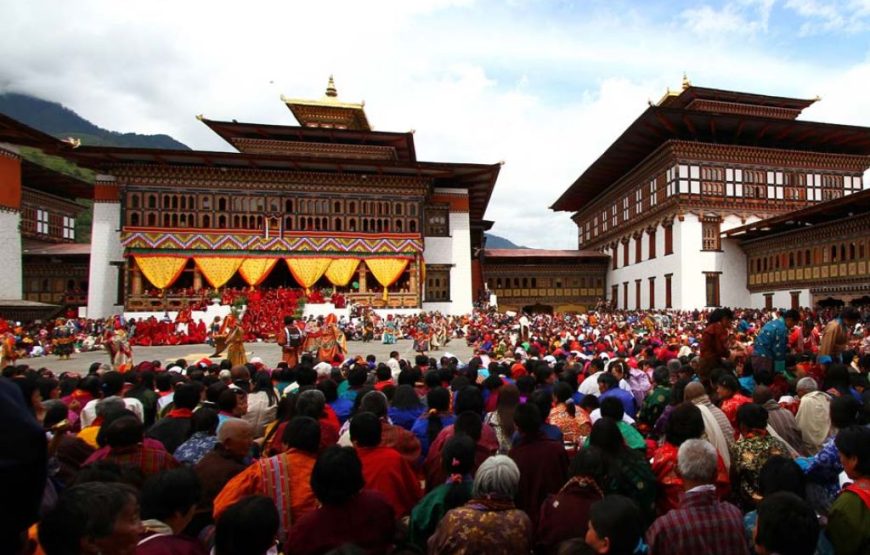
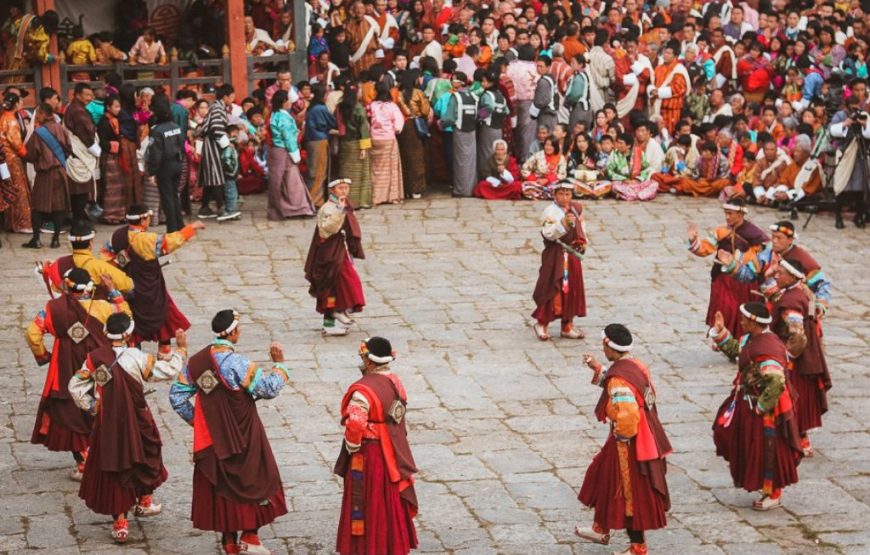
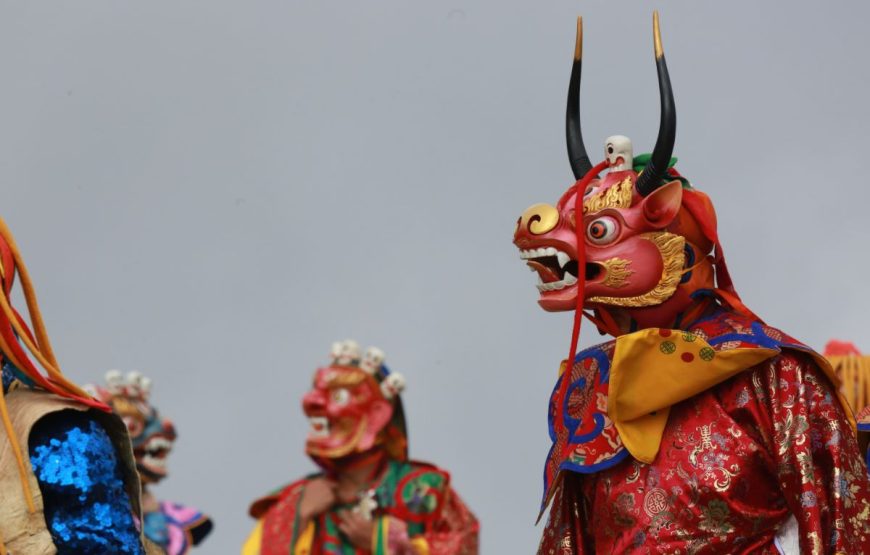
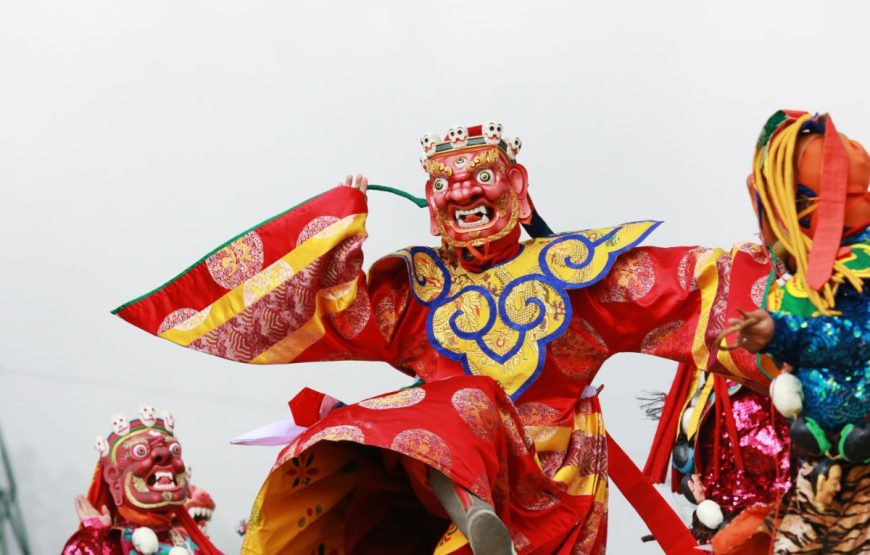
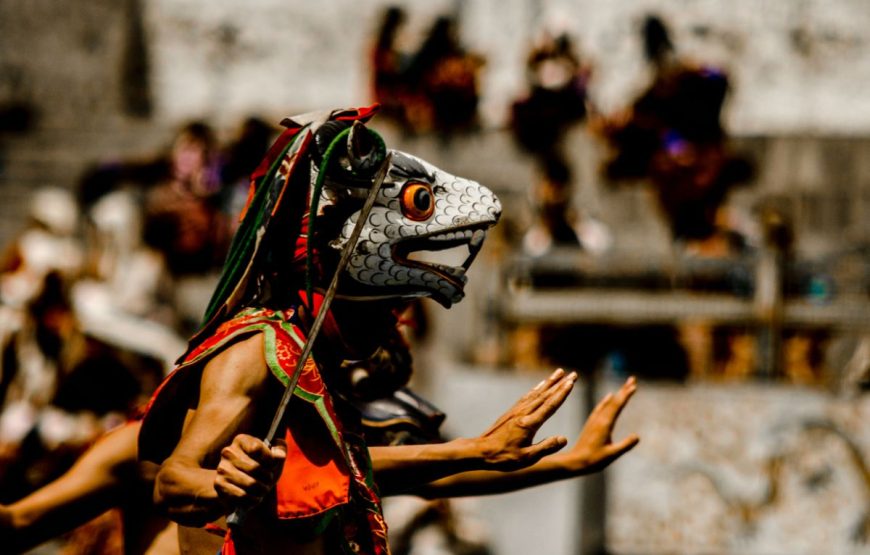
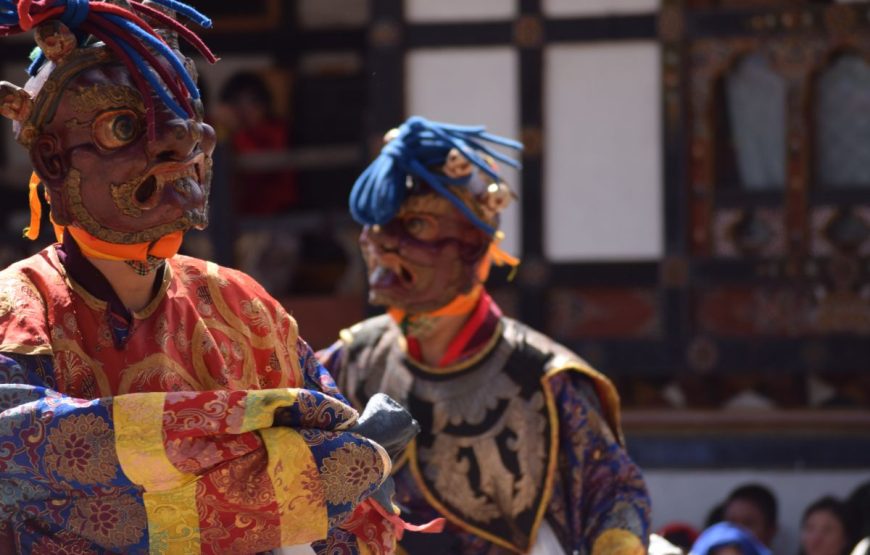
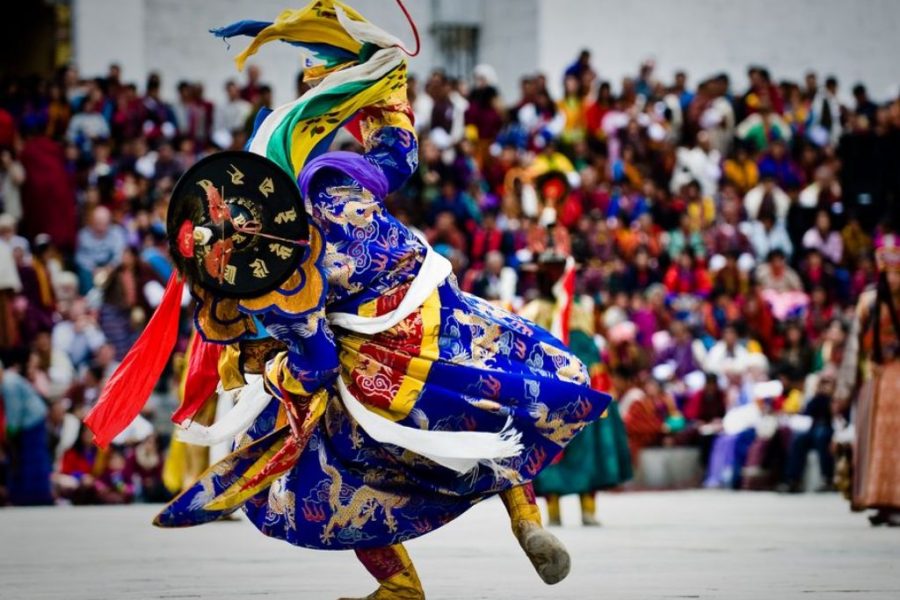
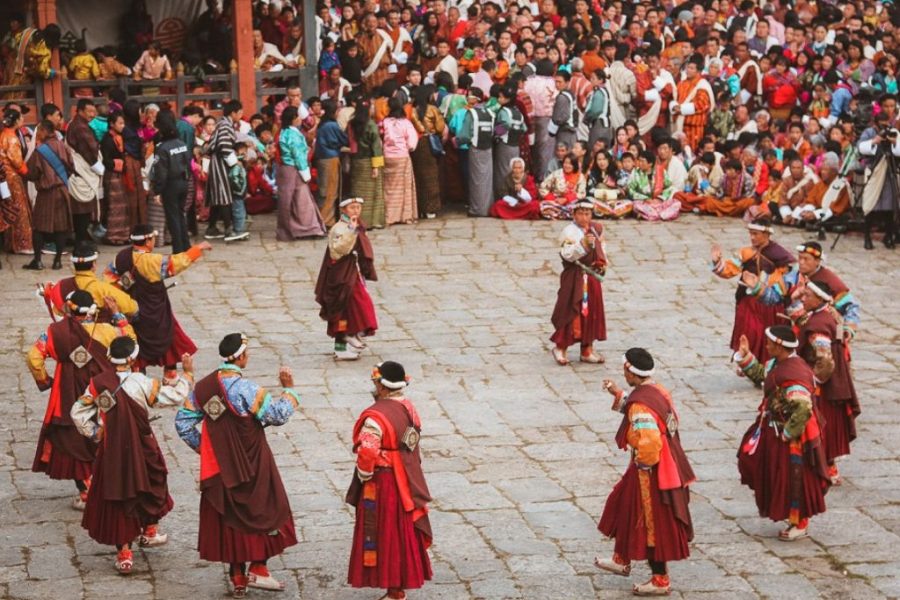
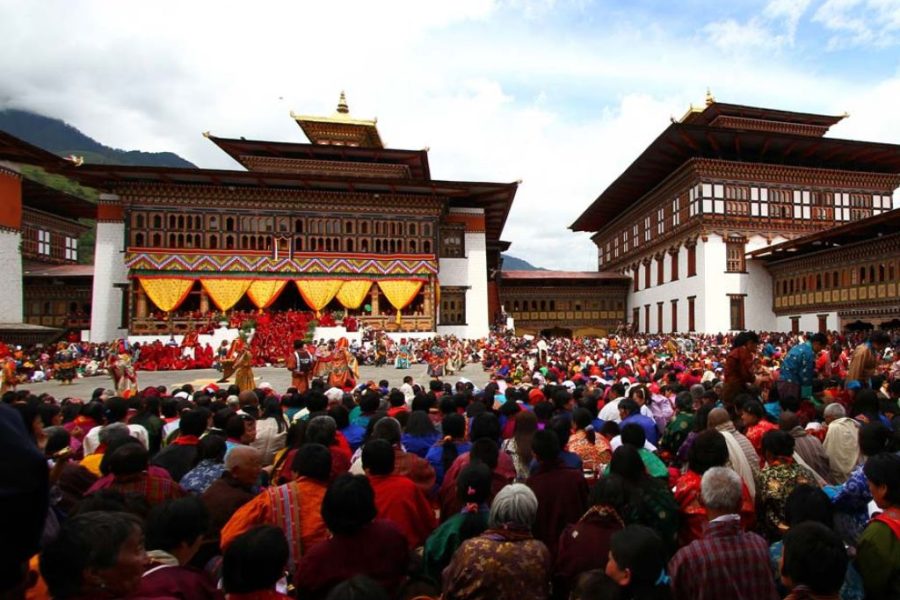
Step into a world of ancient rituals, mystical dances, and breathtaking landscapes on this unforgettable journey through Bhutan. Timed around the Jambay Lhakhang Drup Festival, this 11-day itinerary offers an authentic glimpse into Bhutan’s deep-rooted spirituality and cultural heritage. Witness the famous Naked Dance, experience the sacred Fire Dance (Mecham), and immerse yourself in the vibrant celebrations of mask dances and blessings at the 7th-century Jambay Lhakhang Monastery. Along the way, explore Bhutan’s stunning valleys, historic dzongs, and hidden spiritual sites while experiencing its warm hospitality and rich traditions.
After an unforgettable descent into Paro International Airport—one of the world’s most dramatic landings—you’ll be treated to breathtaking views of the Himalayas, including Mount Everest, Kanchenjunga, and Bhutan’s own majestic peaks, Jomolhari and Jichu Drake. Upon arrival, our
company representatives will warmly welcome you and escort you on a scenic drive to Thimphu, the capital city of Bhutan, where your adventure truly begins. Then head to the Memorial Chorten, a stupa revered by localsfor daily prayers and rituals. Conclude your day with dinner at a local restaurant, enjoying traditionalBhutanese cuisine.
Overnight in Thimphu.
Your morning begins with a serene visit to the Memorial Chorten, a revered stupa built in honor of Bhutan’s third king, Jigme Dorji Wangchuck. Locals and pilgrims alike circle the chorten in prayer, creating a peaceful, meditative atmosphere.
Next, ascend to Buddha Point (Kuensel Phodrang), where the world’s largest seated Buddha gazes over the valley. The panoramic views from this hilltop are simply breathtaking, offering a sweeping perspective of Thimphu nestled among forested mountains.
Continue to the Zorig Chusum Institute, commonly known as the Arts and Crafts School, where young Bhutanese artists train in the 13 traditional arts of Bhutan. Watch students bring intricate thangka paintings, wood carvings, and embroidery to life.
Then head to Sangaygang Viewpoint, a popular spot for a bird’s-eye view of the city and its surrounding hills. Nearby lies the Takin Preserve, home to Bhutan’s quirky national animal—the takin. Legend has it that this unique creature was created by the great Buddhist master Drukpa Kunley.
You will start your journey towards Punkha after visiting Simtokha Dzong in the morning. The magnificent Bhutanese architectural fortress is known to be the very first dzong in the history of Bhutan, built by Zhabdrung Ngawang Namgyel. On your mid-journey, you will stop by the Dochu La Pass at an elevation of 10,000 feet (3,050 meters). You will be amazed by the views of the mountains around you while circumambulating the 108 Wangyel Stupas at Dochula. Next, we will make a visit to Chimi Lhakhang, the temple known for fertility. Chimi Lhakhang is believed to be one of the unique spots filed with the art of Phallus. Bhutanese who wish to be blessed with their own children take refuge here. Your tour for the day will end with a visit to Punakha Dzong, another Bhutanese architectural master piece standing beautifully at the intersection of Pho Chhu and Mo Chhu.
After breakfast, we begin the 105 km drive to Gangtey via Wangduephodrang. It will take us about 4 hours with the road gradually ascending till Lawala pass (1100 feet). Passing through Nobding village, the vegetation consists of high altitude dwarf bamboo, rhododendron flowers, Magnolia, fir and pine trees. We will reach Phobjikha valley at 3,000m, in the Black Mountain Ranges. Phobjikha is one of the most beautiful valleys in Bhutan and home to the very rare black necked crane. The birds migrate from Tibet to Bhutan in winter (from October -March). So, you can expect to see flocks of Black Necked Cranes. We will be visiting Gangtey Gompa, one of the oldest Nyingma monasteries that look like a small Dzong.
After breakfast, we drive to Bumthang via Pelela pass, the traditional boundary between Western and Eastern Bhutan. En-route we will stop at Chummy village to visit the yathra weaving centre. Continue driving to Bumthang and stay at a local hotel.
We will spend the entire day sightseeing, beginning with a visit to Chakhar Lhakhang (Iron Castle), believed to be the site of the palace of the Indian King Sendha Gyab, also known as Sindhu Raja. Next, we’ll explore Kurjey Lhakhang—“Kurjey” meaning “body imprint”—where the temple to the right was built by Minjur Tempa in 1652 around the sacred cave where Guru Rinpoche meditated and left his body imprint. We’ll continue to Tamshing Lhakhang, also known as Tamshing Lhendrup Chholing (“Temple of the Good Message”), and then visit Jakar Dzong, a fortress that now serves as the administrative center of the valley and the summer residence of monks. In the evening, we’ll witness the opening of the festival, which begins late at night.
Among its unique features is the Fire Dance (Mecham), where an arch of pine is set ablaze to symbolically purify the earth of evil spirits. Those who pass through the flaming arch are believed to have their sins cleansed, while a dancer performs to chase away malevolent forces. We will conclude our Bumthang excursion with this powerful and spiritually charged celebration.
Today we will drive towards Punakha which will take us around 5 hours and we hike to the Khamsum Yulley Chorten. Perched on a hill in Punakha valley, the Khamsum Yulley Namgyal Chorten is a unique example of Asian architecture. Unlike typical Buddhist institutions, it was built by Queen Mother Ashi Tshering Yangdon Wangchuck for a special purpose: to dispel negative forces and bring harmony to all living beings. Its golden spire and intricate wall patterns are striking symbols of Bhutanese art and tradition.
Today, we journey from Punakha to Paro, a 3-hour drive. Upon arrival, we’ll explore Paro’s historic district, home to sacred sites and historical buildings. Highlights include Drukgyel Dzong, symbolizing Bhutanese victory over Tibetan invaders, and Ta Dzong, housing the Paro National Museum with its unique collections and panoramic views over the valley.
After an early breakfast drive up to the Ramthangka (base camp) of Taktsang and then hike up to the famous Tiger’s Lair. It is a 5 hour round trip. Follow an ancient path marked by river powered prayer wheels to Taksang Monastery, perched some 1000m/3,000ft up on a cliff overlooking the valley. It is said that to be where the legendary Indian saint, Guru Padma Sambhava, flew from Tibet on the back of a tiger to defeat five demons, who were opposing the spread of Buddhism in Bhutan in 746 A.D. On the way, visit the Drugyel Dzong, located 16 Km. away from the Paro town. Although in ruins, this Dzong is of great historical importance. It was here that the Bhutanese finally defeated the invading Tibetans and drove them back. From here, Jomolhari peak or “Mountain of the Goddess” can be seen on a clear day (Alt. 7,329m/24,029ft.). We will conclude the day with complimentary hot stone bath after the hike.
After breakfast, you will be driven to Paro international airport for your onward flight. Our representative will see you off. Thank you and visit us again.
Bhutan is a year-round destination. There are four seasons: summer (June to August), autumn (September to November), winter (December to February) and spring (March to May). But because of the range of altitudes in the country, and the influence of the north Indian monsoons, the climate is incredibly varied.
In the south, the humid, subtropical climate is fairly consistent year-round, with temperatures between 15oC and 30oC. Central Bhutan, with its temperate forests, has a more seasonal climate, with warm summers and cool, dry winters. The northern regions are much colder during winter. Because of the high altitude, mountain peaks are snowy year-round and the lower reaches remain cool in summer.
In summer, the Indian monsoon season runs from late June or July to late September, mostly affecting the southern regions. Most farming activities take place in the summer, when crops thrive in verdant landscapes.
Autumn, from late September or early October to late November, follows the rainy season. It is characterised by bright, sunny days and some early snowfall at higher elevations. It’s the season of feasts and festivals as farmers reap the fruits of their work.
From late November until March, the crisp, clear and sunny winter sets in, with frost throughout much of the country and snowfall common above elevations of 3,000 metres. The winter northeast monsoon brings gale-force winds at the highest altitudes through high mountain passes, giving Bhutan the name Drukyul, which means Land of the Thunder Dragon in Dzongkha (Bhutan’s national language).
Bhutan’s generally dry spring starts in early March and lasts until mid-April. It is a botanist’s delight, with nature in full bloom. Summer weather commences in mid-April with occasional showers and continues to late June.
If you would like to book completely independently, there are plenty of online resources for inspiration, research and booking – including this website. There are lots of experienced, accredited tour operators that can help you too. Please check our website https://services.bhutan.travel/ for a full list of DOT-certified Tour Operators, hotels and guides.
Our host team is also on hand to help provide you with information as you plan your journey.
The country has one international airport located in Paro. Flights operated by Drukair and Bhutan Airlines arrive and depart from destinations including Bangkok, Delhi, Kolkata, Bagdogra, Bodhgaya, Dhaka, Kathmandu, Guwahati and Singapore. Private jets or charters can fly into Bhutan after obtaining the relevant approvals.
There are also domestic airports in Yonphula in eastern Bhutan, Bumthang in central Bhutan, and Gelephu in south-central Bhutan.
There are no rules about what visitors should wear. However if you are planning to visit places of religious significance, respectful smart-casual clothing that covers your body from shoulders to knees is appropriate and appreciated.