from 0 review
11 Days 10 Nights
Daily Tour
Unlimited
Any Preferred Language
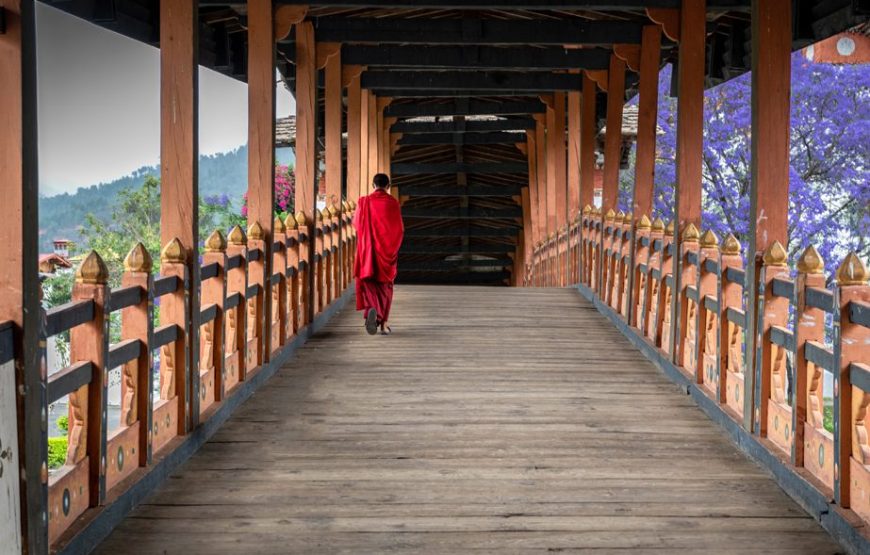
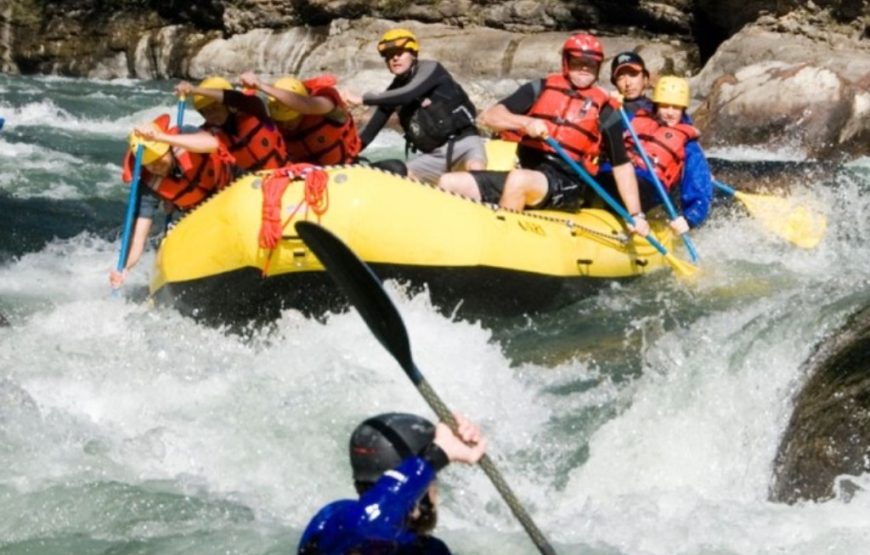
From cliffside monasteries to river-kissed valleys, this 10-day itinerary invites you to experience Bhutan not just as a destination—but as a living, breathing story. With Thrung Thrung, every moment is curated for connection, reflection, and awe.
Trip Facts
Trip Duration: 11 Days
Districts: Paro, Thimphu, Wangduephodrang, Punakha, Trongsa, Bumthang
Accommodation: Hotel or Resort
Entry: Paro
Exit: Paro
After an unforgettable descent into Paro International Airport—one of the world’s most dramatic landings—you’ll be treated to breathtaking views of the Himalayas, including Mount Everest, Kanchenjunga, and Bhutan’s own majestic peaks, Jomolhari and Jichu Drake. Upon arrival, our company representatives will warmly welcome you and escort you on a scenic drive to Thimphu, the capital city of Bhutan, where your adventure truly begins.
En route, we’ll pause at the historic Tamchoe Lhakhang, perched dramatically above the Paro River. This revered temple is believed to be one of the residences of Thangtong Gyalpo, the legendary 14th-century Tibetan Buddhist master known as Chakzampa, or the “Iron Chain Maker.” He is credited with constructing 58 iron chain suspension bridges across Tibet and Bhutan—several of which still stand today, including the one beside Tamchoe Lhakhang.
The two-storied temple houses sacred relics and artifacts said to have been left by Thangtong Gyalpo himself. Local lore holds that visiting Tamchoe Temple, Kyichu Lhakhang, and Lhading Temple all in a single day can liberate one from the cycle of samsara, thanks to the spiritual power of the large sculptures enshrined within each.
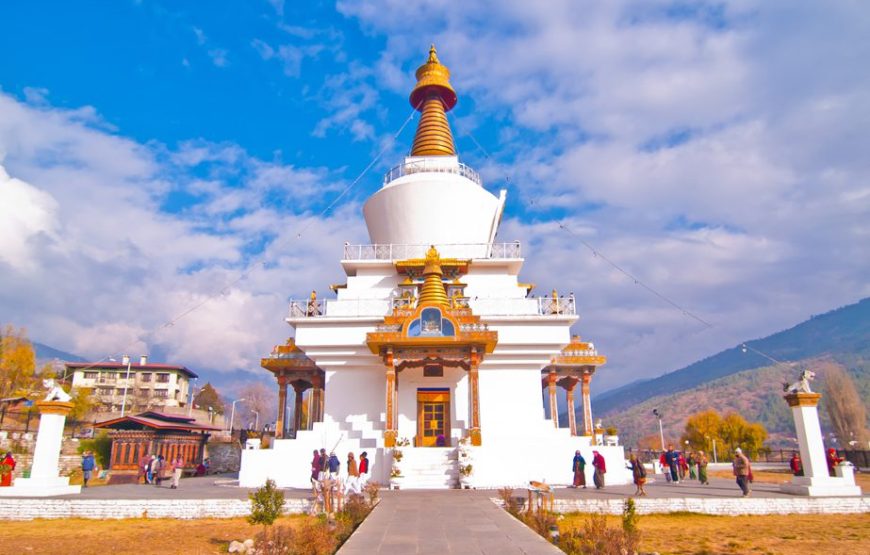
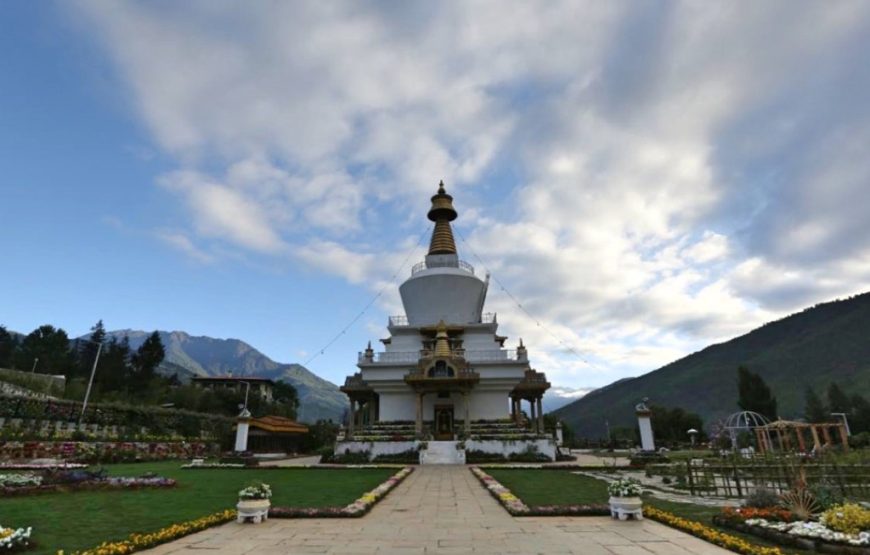
Your morning begins with a serene visit to the Memorial Chorten, a revered stupa built in honor of Bhutan’s third king, Jigme Dorji Wangchuck. Locals and pilgrims alike circle the chorten in prayer, creating a peaceful, meditative atmosphere.
Next, ascend to Buddha Point (Kuensel Phodrang), where the world’s largest seated Buddha gazes over the valley. The panoramic views from this hilltop are simply breathtaking, offering a sweeping perspective of Thimphu nestled among forested mountains.
Continue to the Zorig Chusum Institute, commonly known as the Arts and Crafts School, where young Bhutanese artists train in the 13 traditional arts of Bhutan. Watch students bring intricate thangka paintings, wood carvings, and embroidery to life.
Then head to Sangaygang Viewpoint, a popular spot for a bird’s-eye view of the city and its surrounding hills. Nearby lies the Takin Preserve, home to Bhutan’s quirky national animal—the takin. Legend has it that this unique creature was created by the great Buddhist master Drukpa Kunley.
The drive from Thimphu to Punakha takes approximately three hours, winding through a landscape that shifts dramatically—from alpine forests to cascading waterfalls, vibrant wildflowers, and sweeping mountain meadows. About 45 minutes into the journey, we’ll pause at the iconic Dochula Pass (3,100m), a beloved viewpoint adorned with 108 intricately built Druk Wangyel Chortens. On a clear day, the pass offers a panoramic view of the eastern Himalayan range, with peaks soaring between 6,000m and 7,554m, their snow-capped summits shimmering in the morning light.
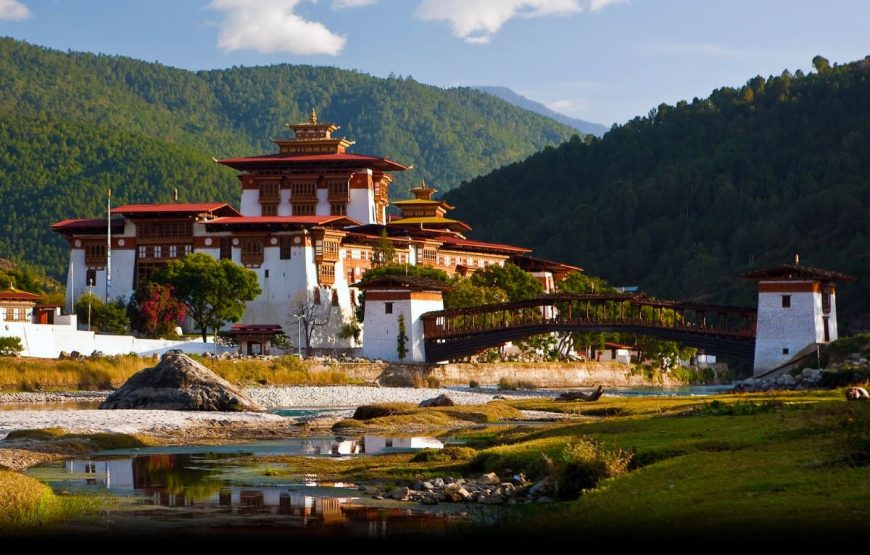
From Dochula, the road descends into the subtropical valley of Punakha, Bhutan’s former capital and a treasure trove of sacred relics and historical grandeur. Nestled between the Pho Chhu (Male River) and Mo Chhu (Female River), the majestic Punakha Dzong rises like a ship anchored in a sea of green. Built in 1637 by Zhabdrung Ngawang Namgyal, the Dzong has played a pivotal role in Bhutan’s civil and spiritual history. Though it has endured fires and an earthquake in 1897, it has been lovingly restored to its original splendor and remains the winter residence of the Chief Abbot.
Before reaching the Dzong, we’ll take a short hike—about 45 minutes round trip—to Chimi Lhakhang, the temple of the “Divine Mad Monk,” Drukpa Kunley. Built in the 15th century, this monastery is famed for its fertility blessings and its playful, unconventional spiritual legacy.
After exploring the Dzong, we’ll enjoy a leisurely stroll to the nearby Suspension Bridge, a perfect spot for photography, offering sweeping views of the river and valley below.
Your day begins with an invigorating early morning hike to the exquisite Khamsum Yulley Namgyal Chorten, a hilltop stupa built to ward off negative forces and bring peace to the world. The 45-minute walk winds through lush rice fields and pine forests, culminating in a panoramic view of the Punakha Valley—a perfect moment to soak in the serenity and snap some unforgettable photos.
After returning from the hike, we’ll set off on a scenic drive toward Trongsa, passing through Wangduephodrang and crossing the Pele La Pass at 3,300 meters. This high mountain pass marks the traditional boundary between eastern and western Bhutan and is adorned with fluttering prayer flags that lend a spiritual aura to the sweeping Himalayan vistas.
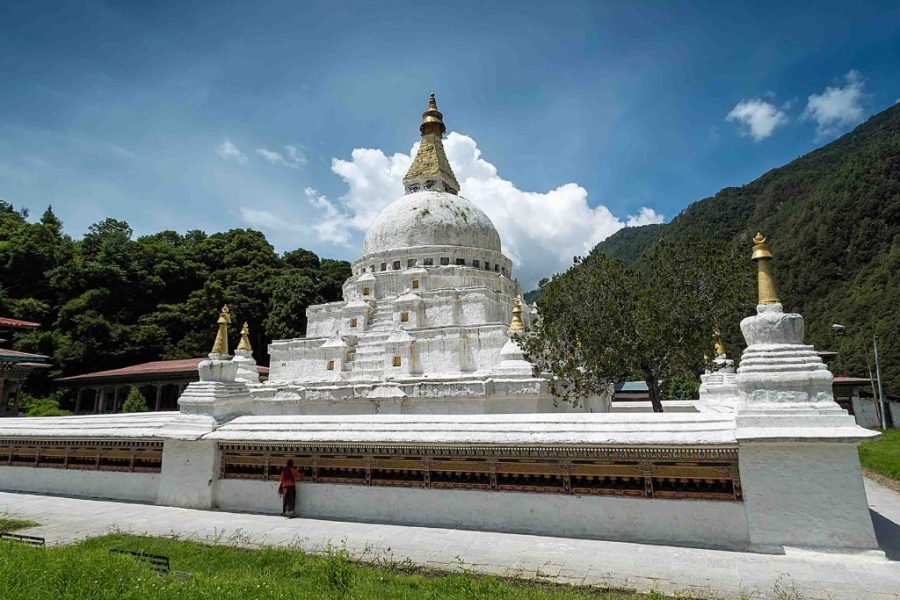
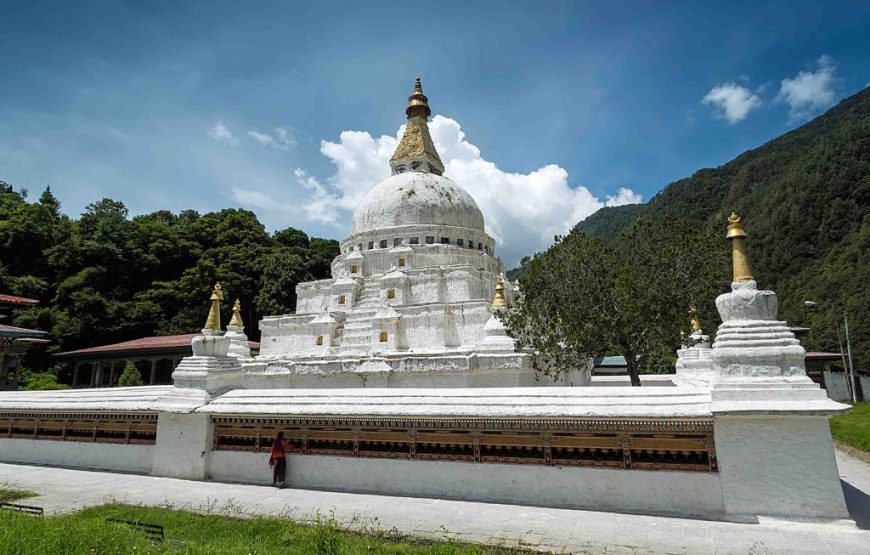
Along the way, we’ll stop at the Chendbji Chorten, an 18th-century stupa built in the Nepalese style by Lama Shida. Its whitewashed dome, flanked by painted eyes gazing in all four directions, evokes the famous Boudhanath Stupa of Kathmandu and offers a tranquil spot for reflection.
By late afternoon, we’ll arrive in Trongsa, where you’ll check in and unwind at your hotel, ready for the next chapter of your Bhutanese adventure.
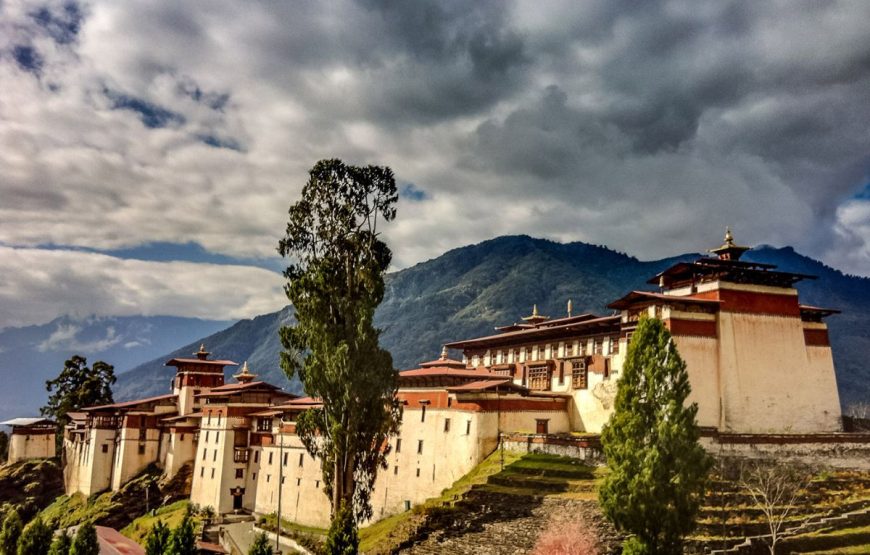
After breakfast, begin your day with a walk around the majestic Trongsa Dzong, built in 1647 by Zhabdrung Ngawang Namgyal. Perched dramatically on a ridge overlooking the Mangde River, this fortress-monastery is not only an architectural marvel but also a cornerstone of Bhutanese history. Traditionally, every Bhutanese king must serve as the Penlop (Governor) of Trongsa before ascending the throne, making this site a symbolic gateway to leadership.
Next, visit the Ta Dzong, the ancient watchtower that once guarded Trongsa Dzong. Today, it houses a fascinating museum showcasing royal memorabilia, religious artifacts, and historical relics that offer insight into Bhutan’s rich past.
From Trongsa, embark on a scenic three-hour drive to Bumthang, the spiritual heartland of Bhutan. About 29 kilometers into the journey, you’ll cross the Yutong La Pass at 3,400 meters, where prayer flags flutter in the alpine breeze. Just 13 kilometers beyond the pass, the road opens into the Chumey Valley, a wide, cultivated expanse known for its traditional weaving and serene beauty.
Upon arrival in Bumthang, check into your hotel and settle in for a peaceful overnight stay, surrounded by the quiet charm of Bhutan’s most sacred region.
Welcome to Bumthang, one of Bhutan’s most sacred and storied regions—a place where myth and history intertwine across a landscape of temples, fortresses, and mystical lakes.
Begin your spiritual journey at Kurje Lhakhang, where Guru Padmasambhava, the revered Indian saint, subdued a local demon and left his body imprint on a rock—an enduring symbol of his presence and power.
Next, visit Jambay Lhakhang, one of Bhutan’s oldest temples, built in the 7th century by Songtsen Gampo, the Tibetan Buddhist King. This temple is part of a network of 108 temples said to have been constructed in a single day to subdue evil spirits across the Himalayas.
Continue to Jakar Dzong, the “Fortress of the White Bird,” perched above the valley. Built in the 17th century by Tenzin Rabgay, Bhutan’s fourth Desi, this fortress is a commanding presence and a symbol of the region’s historical importance.Your pilgrimage continues with visits to:
After a day steeped in legend and devotion, return to your hotel for a restful overnight stay, surrounded by the quiet magic of Bumthang.
After breakfast, begin your scenic drive to Gangtey/Phobjikha Valley, passing once again through Trongsa. As you approach Phobjikha, the road winds through enchanting forests of oak and rhododendron, their seasonal blooms adding bursts of color to the tranquil landscape.
Nestled in the heart of the Black Mountains, Phobjikha Valley is one of Bhutan’s few glacial valleys—a wide, bowl-shaped expanse that feels untouched by time. This serene sanctuary is the winter home of the black-necked cranes, graceful migratory birds that journey from the harsh climate of the central Asiatic Plateau to roost in Bhutan’s milder embrace. Their arrival each year is celebrated with reverence and joy, symbolizing harmony between nature and spirituality.
The valley’s quiet charm, combined with its ecological importance, makes it a deeply rewarding destination for nature lovers and spiritual seekers alike.
Upon arrival, check into your hotel and enjoy a peaceful overnight stay surrounded by the stillness of the valley.
After breakfast, begin your day in the serene Phobjikha Valley, a glacial sanctuary known for its pristine beauty and ecological significance. Your first stop is the Crane Information Center, where you’ll learn about the endangered black-necked cranes that migrate here each winter from the Tibetan Plateau. Through interactive exhibits and observation points, gain insight into the conservation efforts that protect these graceful birds and their habitat.
Next, enjoy a peaceful walk along the Gangtey Nature Trail, a gentle path that meanders through pine forests, open meadows, and quaint villages. The trail offers stunning views of the valley and a chance to connect with Bhutan’s natural rhythms.
Continue to the Gangtey Monastery, one of the most important Nyingma institutions in Bhutan. Perched on a hilltop, this 17th-century monastery overlooks the valley and exudes a quiet spiritual energy. Its architecture and murals reflect centuries of devotion and tradition.
After your visit, begin the scenic drive to Paro via Wangduephodrang, passing through ever-changing landscapes of forested hills, rivers, and rural settlements. Upon arrival in Paro, check into your hotel and unwind for the evening.
Overnight at the hotel, surrounded by the peaceful charm of Paro Valley.
Begin your day with a visit to Kyichu Lhakhang, one of Bhutan’s oldest and most sacred temples. Built in 659 A.D. by the Tibetan Buddhist King Songtsen Gampo, this serene sanctuary is part of a network of 108 temples said to have been constructed to subdue a demoness across the Himalayas. The temple’s peaceful courtyard and ancient orange trees offer a tranquil start to your morning.
Next, take a short drive to the evocative ruins of Drugyel Dzong, the “Fortress of the Victorious Drukpa.” Originally built in the 17th century to commemorate Bhutan’s triumph over Tibetan invaders, the site offers sweeping views of the surrounding valley and, on clear days, glimpses of Mount Jomolhari in the distance.
Continue to the National Museum of Bhutan, housed in the circular Ta Dzong above Paro Dzong. The museum showcases Bhutan’s rich cultural heritage through exhibits of traditional art, religious relics, textiles, and historical artifacts.
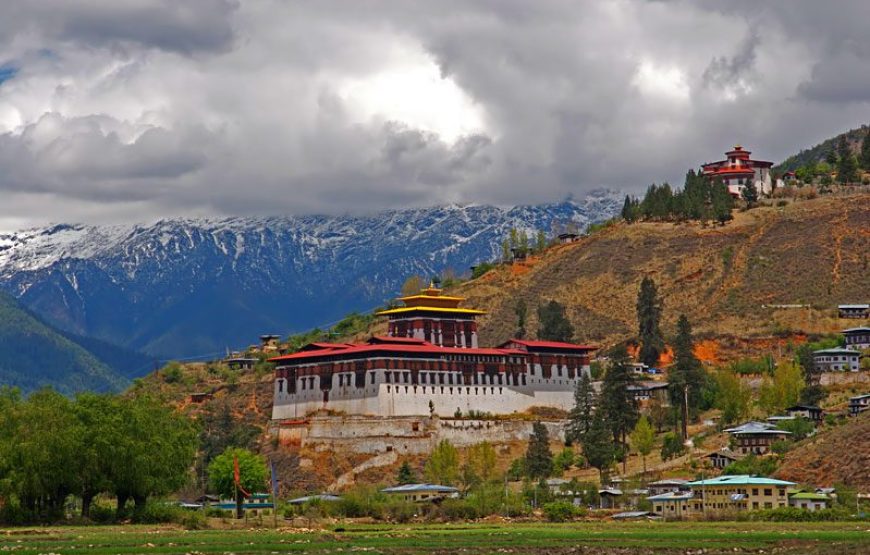
Then, descend to the imposing Paro Rimpung Dzong, a fortress-monastery that dominates the valley. Known as the “Fortress of the Heap of Jewels,” it serves both religious and administrative functions and is a fine example of Bhutanese architecture with its massive walls and intricate woodwork.
After your cultural explorations, enjoy a leisurely stroll through Paro town, browsing local handicrafts, chatting with friendly shopkeepers, or simply soaking in the valley’s peaceful ambiance.
Overnight at your hotel, with the spirit of Paro’s timeless heritage lingering in your heart.
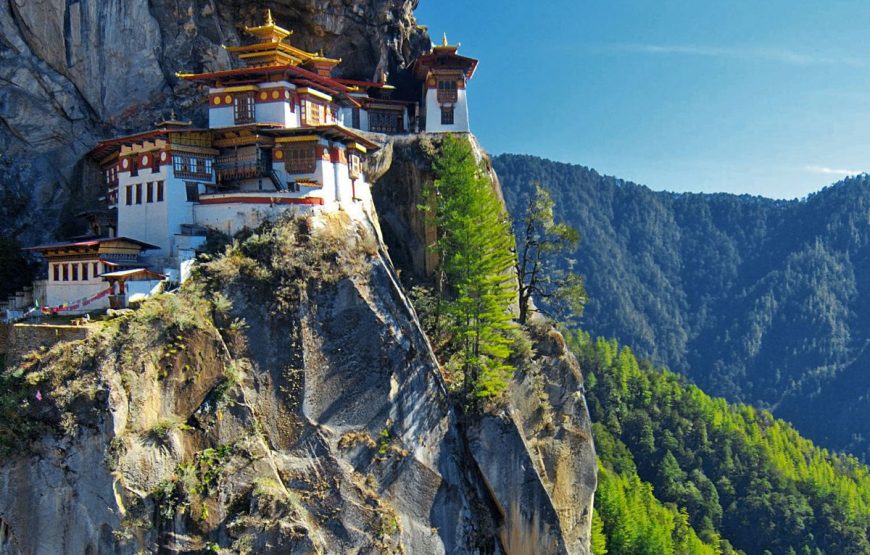
Today’s journey takes you to one of Bhutan’s most revered and iconic landmarks—Taktsang Monastery, also known as the Tiger’s Nest. Perched dramatically on a sheer cliff face about 1,000 meters (3,000 feet) above the Paro Valley, this architectural marvel defies gravity and inspires awe.
Legend holds that in 746 A.D., the great Indian saint Guru Padmasambhava flew to this site from Tibet on the back of a tigress to subdue five demons obstructing the spread of Buddhism in Bhutan. He meditated here for three months, sanctifying the site and establishing it as a spiritual beacon. Today, Taktsang is considered the ultimate pilgrimage destination for Buddhists, especially within Bhutan. The trail is both physically invigorating and spiritually uplifting, with rest stops and viewpoints along the way. Midway, a teahouse provides a perfect spot to pause and admire the monastery from afar.
Reaching the monastery is a moment of quiet triumph—whether for spiritual reflection, cultural appreciation, or sheer wonder at its cliffside majesty.
After descending, return to your hotel in Paro for a well-earned rest and a final evening in the Land of the Thunder Dragon.
After early breakfast, we drive to the airport for flight to onward destination.
Bhutan is a year-round destination. There are four seasons: summer (June to August), autumn (September to November), winter (December to February) and spring (March to May). But because of the range of altitudes in the country, and the influence of the north Indian monsoons, the climate is incredibly varied.
In the south, the humid, subtropical climate is fairly consistent year-round, with temperatures between 15oC and 30oC. Central Bhutan, with its temperate forests, has a more seasonal climate, with warm summers and cool, dry winters. The northern regions are much colder during winter. Because of the high altitude, mountain peaks are snowy year-round and the lower reaches remain cool in summer.
In summer, the Indian monsoon season runs from late June or July to late September, mostly affecting the southern regions. Most farming activities take place in the summer, when crops thrive in verdant landscapes.
Autumn, from late September or early October to late November, follows the rainy season. It is characterised by bright, sunny days and some early snowfall at higher elevations. It’s the season of feasts and festivals as farmers reap the fruits of their work.
From late November until March, the crisp, clear and sunny winter sets in, with frost throughout much of the country and snowfall common above elevations of 3,000 metres. The winter northeast monsoon brings gale-force winds at the highest altitudes through high mountain passes, giving Bhutan the name Drukyul, which means Land of the Thunder Dragon in Dzongkha (Bhutan’s national language).
Bhutan’s generally dry spring starts in early March and lasts until mid-April. It is a botanist’s delight, with nature in full bloom. Summer weather commences in mid-April with occasional showers and continues to late June.
If you would like to book completely independently, there are plenty of online resources for inspiration, research and booking – including this website. There are lots of experienced, accredited tour operators that can help you too. Please check our website https://services.bhutan.travel/ for a full list of DOT-certified Tour Operators, hotels and guides.
Our host team is also on hand to help provide you with information as you plan your journey.
The country has one international airport located in Paro. Flights operated by Drukair and Bhutan Airlines arrive and depart from destinations including Bangkok, Delhi, Kolkata, Bagdogra, Bodhgaya, Dhaka, Kathmandu, Guwahati and Singapore. Private jets or charters can fly into Bhutan after obtaining the relevant approvals.
There are also domestic airports in Yonphula in eastern Bhutan, Bumthang in central Bhutan, and Gelephu in south-central Bhutan.
There are no rules about what visitors should wear. However if you are planning to visit places of religious significance, respectful smart-casual clothing that covers your body from shoulders to knees is appropriate and appreciated.