from 0 review
7 Days 6 Nights
Daily Tour
Unlimited
Any Preferred Language
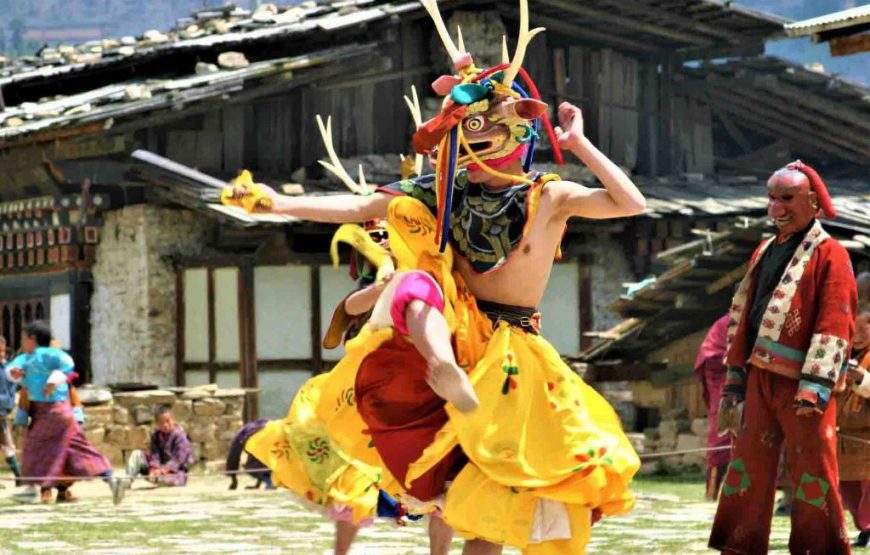
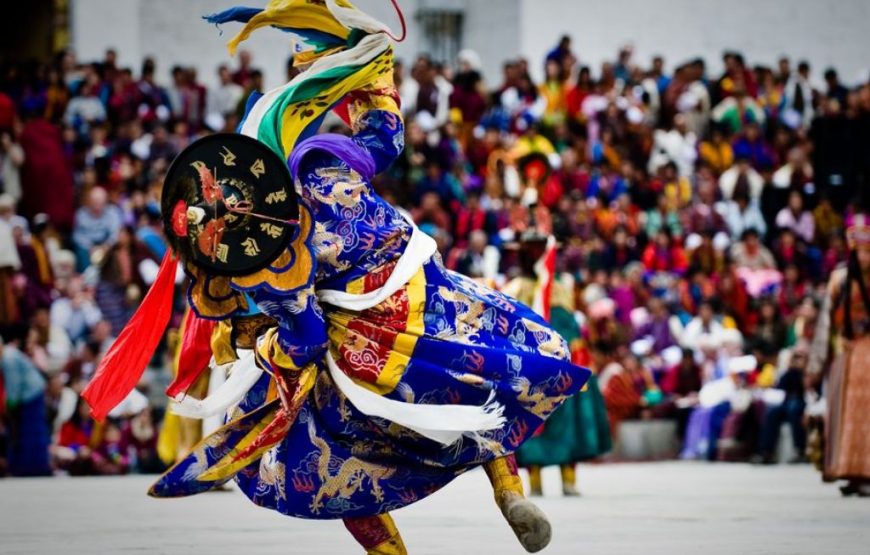
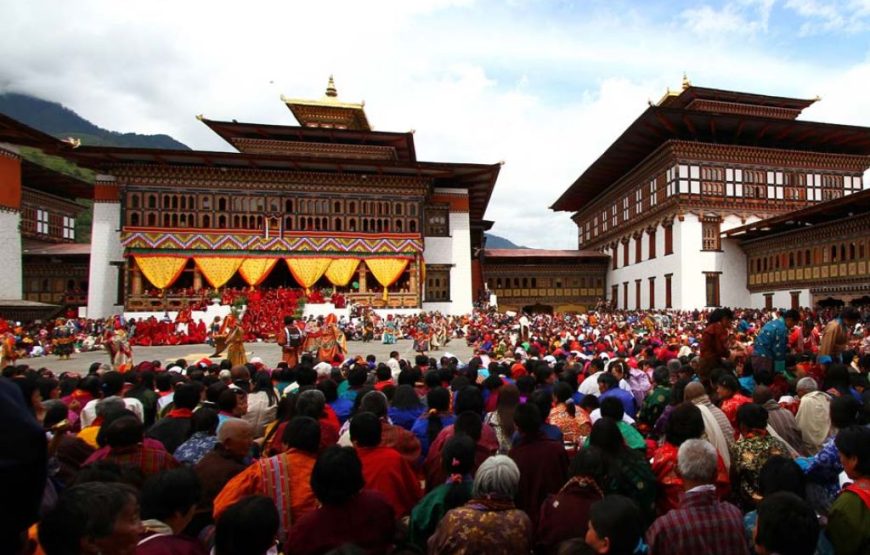
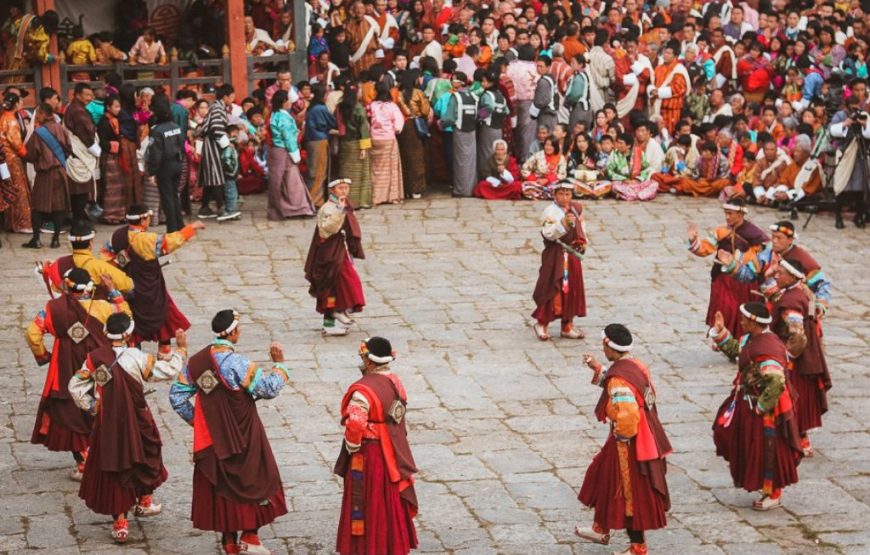
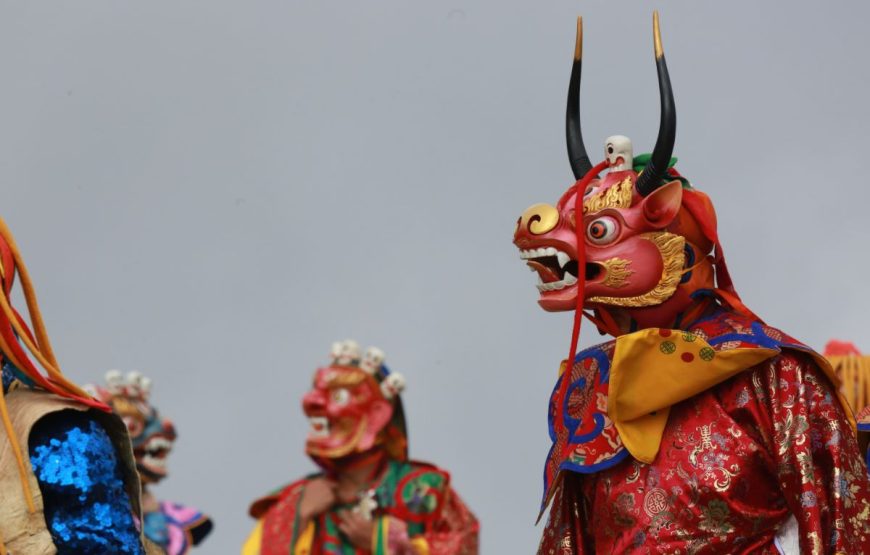
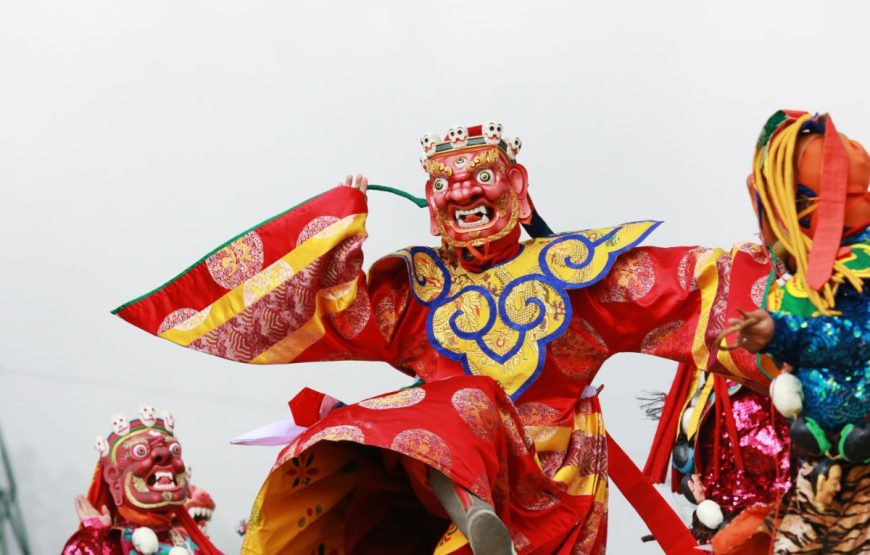
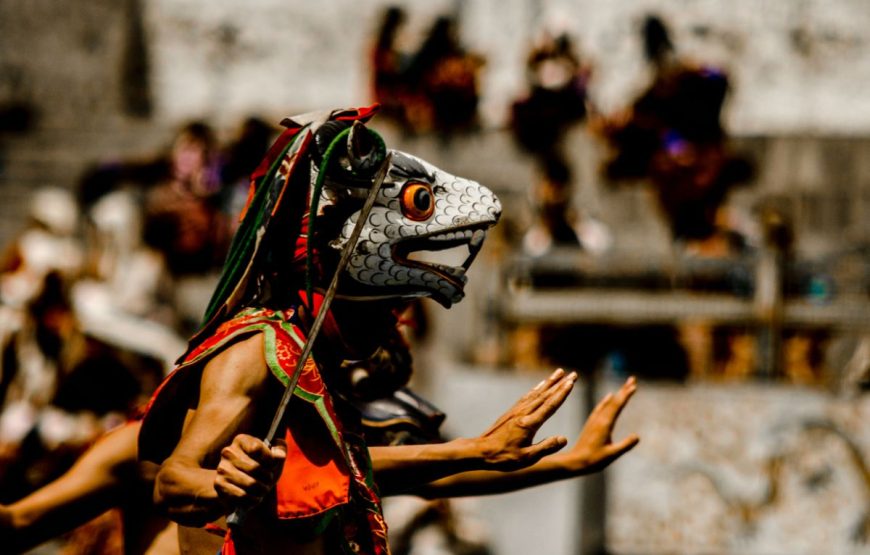
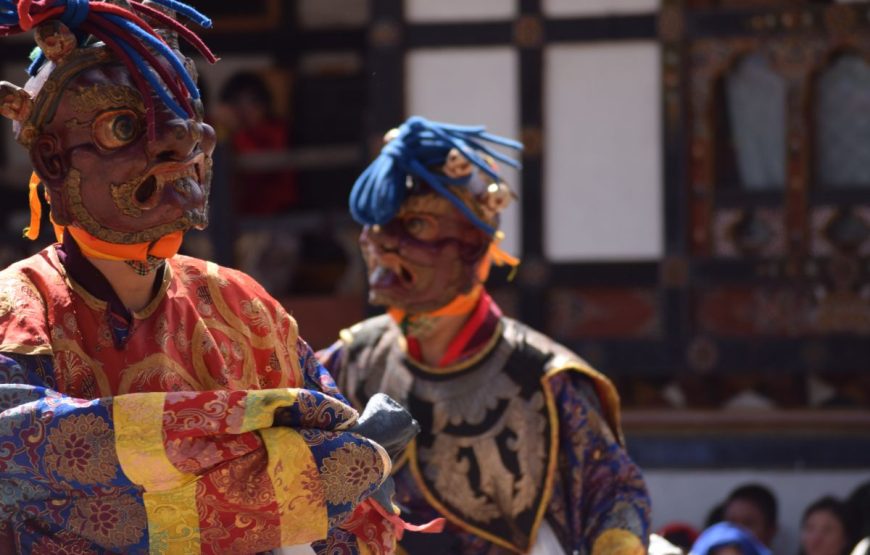
Paro Tshechu, one of Bhutan’s largest festivals, spans five days, featuring pre-festival rituals, ceremonies inside Paro Dzong, and a main festival at the festival ground. A key highlight is the unfurling of the Thongdrol, a large silk appliqué thangka, believed to bring enlightenment. The sacred Thongdrol of Guru Rinpoche is displayed on the final day, attracting many attendees.
The itinerary includes attending the final day of the festival, 2 nights in Thimphu, 2 nights in Punakha, and 2 nights in Paro for a cultural immersion in Bhutan.
Trip Facts
Trip Duration: 08
Districts: Paro, Thimphu and Punakha
Accommodation: Hotel or Resort
Upon arrival at Paro International Airport, your guide will be waiting to pick you up, and you will be transported by private vehicle to Thimphu, the capital city of Bhutan. The drive takes about 1.5 hours in total, during you can stop on the way to see the Tamchhog Lhakhang, a hereditary place of worship for the Bhutan’s iron bridge builders. Thimphu is the fifth highest capital city in the world, with elevations ranging between 2,248 metres and 2,648 metres above sea level, and it’s also the only capital city without any traffic lights. The city is a blend of modernity and Bhutanese tradition.
Later, visit Buddha Point, home to the Buddha Dordenma, the city’s most famous landmark, and a 51-metre gilded bronze statue filled with 125,000 miniature statues. The Memorial Chorten, a Tibetan-style stupa built in 1974, will be your final stop of the day. Provided we have time after these two visits, we will head towards Tashichho Dzong, the main secretariat building built in 1642. This massive structure houses the State Monastic Body and the living quarters of the Chief Abbot and senior monks. Have dinner with your guide at one of Thimphu’s many excellent restaurants.
The morning will be dedicated to short hike and the rest of the day sightseeing. We will drive for 30 minutes to reach Cheri base and then hike up to the monastery. In 1627, Shabdrung established Bhutan’s first Buddhist Monastic school at Cheri, now a meditation center for advanced Buddhist studies. The monastery, housing sacred relics, provides a purifying and refreshing visit. A 40-minute hike from Dodayna through blue pine, oak trees, and rhododendrons leads to Cheri Monastery.
After the hike you will visit Takin Preserve and then to Sangaygang, a place from where you can have a bird’s eye view of Thimphu town and the surroundings. Then we will head towards the Arts and Craft school which is also known as School of Painting. For the dinner we will visit the Folk Heritage Museum.
Overnight in Hotel
After breakfast, drive to Punakha. On the way, stop at Dochula Pass (Alt. 3050m.) For tea/coffee, enjoy our first view of the eastern Himalayan Mountains. Here you can spend some time photographing the Druk Wangyal Chortens. Built in 2004 to “celebrate the stability and progress that His Majesty has brought to the nation,” this hill of 108 religious buildings in the middle of the pass reflects Bhutan’s spiritual and artistic traditions. Visit Chimi Lhakhang, a temple dedicated to Lama Drukpa Kuenley, the famous saint known affectionately as “Divine Mad Monk”.
After breakfast, drive to the north of Punakha for a short excursion to Khamsum Yuelley Namgyel Chorten. It stands majestically on a strategic ridge above the Punakha valley. Thragthung Dudjom Lingpa visualized it out of Buddhist treasure teachings. It is sacred religious edifices, which will help to ward off negative forces, promote peace, stability and harmony in a changing world. It is the only one of its kind in the world. This chorten is a fine architectural and traditional manifestation whose details of constructional design are drawn from the scriptures and not from the technical books. The Chorten is also an esoteric embodiment of positive forces prevailing over all negative influences in the three forms of existence. According to Lamas, the Chorten is a quintessence of Buddhism and in various ways it will promote the health, happiness of the king and people thereby subjugating all evils.
After lunch, visit Punakha Dzong, which lies between two rivers known as Phochu and Mochu, Symbolizing the masculine and the feminine co-existence. Their currents are of different colours and they unite at this spot. Then drive to Paro which takes about 3.5hrs.
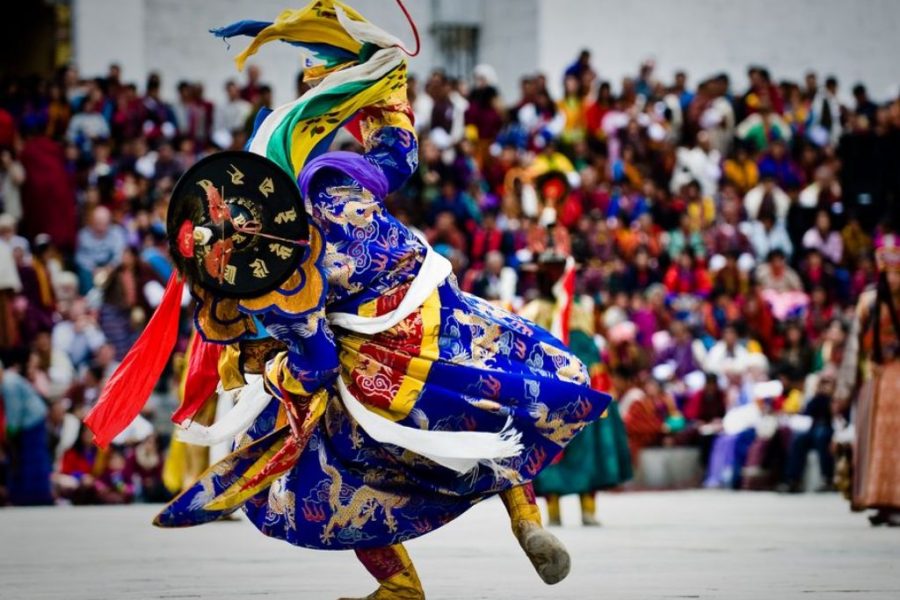
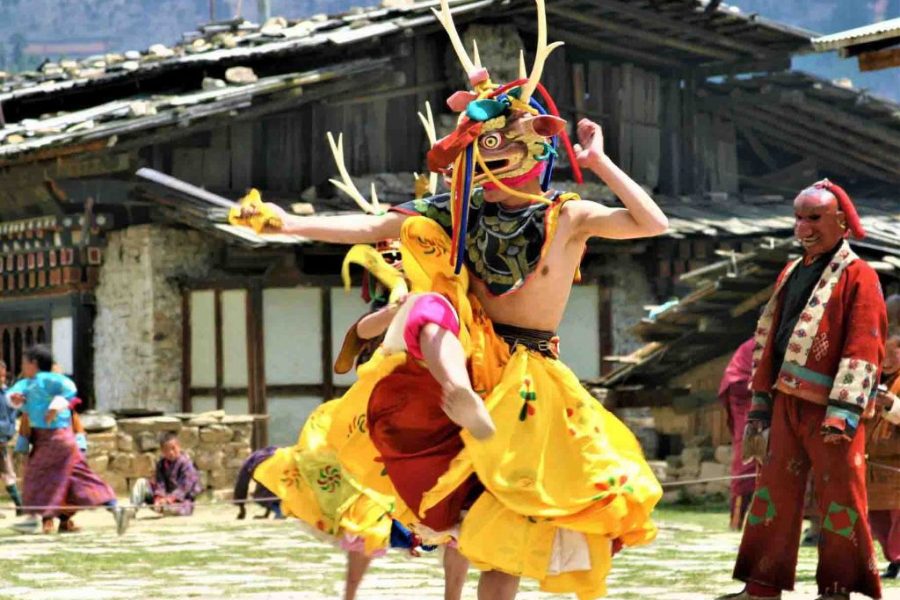
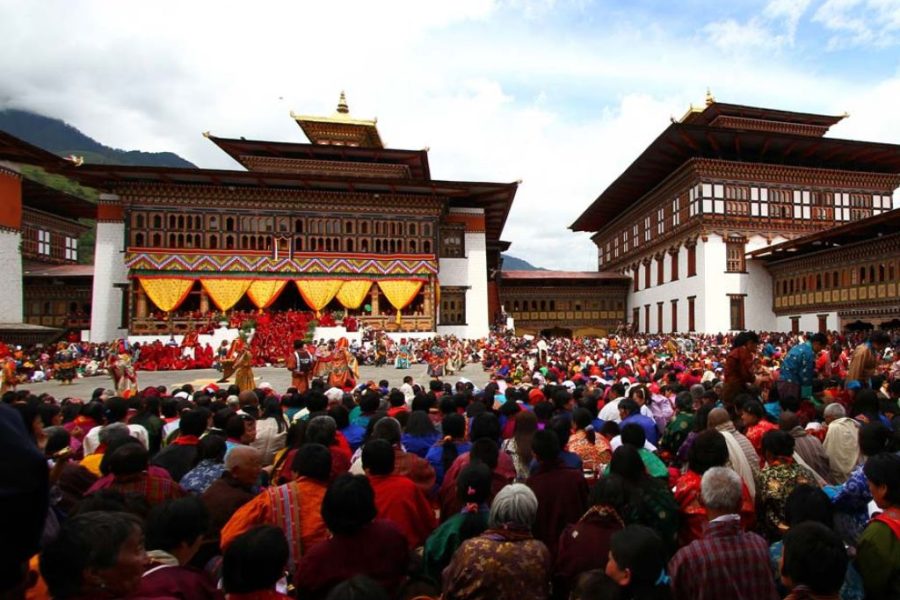
Paro Tshechu is one of the biggest festivals in the Bhutanese calendar and was started by Zhabdrung Ngawang Namgyal, and Penlop Rigzin Nyingpo during the consecration of Paro Dzong in 1644. The festival is observed in three parts – the pre-festival rituals on the first day, ceremonies on the second day inside the Paro Dzong, and the main festival at the festival ground for three days. Bhutanese from all walks of life in their finery come to attend the five-day festival.
A special event in all Tsechus is the unfurling of the Thongdrol, meaning “Liberation at Sight.” This comes from the belief that seeing an aesthetically proportioned Buddhist image plants a seed of enlightenment in the viewer’s heart. That seed matures into the liberation of one’s mind and frees us from endless rebirths of suffering.
The sacred Thongdrol of Guru Rinpoche is displayed early in the morning on the last day of the Tshechu. On such occasion, the festival venue fills with people at dawn in cold. We will be witnessing the festival on the final day of the Tsechu which includes the main event of the Tsechu- unfurling of Thongdrol.
After lunch we will visit Drukgyel Dzong, a victory fortress of the 17th century. Although in ruins, this Dzong is of great historical importance. It was here that the Bhutanese finally defeated the invading Tibetans and drove them back. Other sights of today are the visit to Kyichu temple which dates back from the 8th century. Kyichu temple is one of the last three surviving temples. In the 8th century 108 such temples were built by a Tibetan King. Till date only three had survived, two in Bhutan and one in Tibet province of China known as the Jokhang in Lhasa. Visit Paro town, stroll through its quaint two streets and browse through the shops.
Dinner and overnight stay in Paro.
After an early breakfast, drive 13kms to reach you at the foot of the Taktshang cliff from where you will have to climb uphill about 2 hours to appear you before Taktshang monastery perched giddily on a rocky ledge with a sheer drop of 800m alongside a waterfall cascading as if from the blue. Guru Padmasambhava, known as the Second Buddha, alighted from the flying tigress and meditated at the shrine in the second half of the 8th century. As a result, it is the dream destination for Buddhist pilgrims from the world over. You will have a ‘picnic lunch’ in the Taktshang Cafeteria on your return from the monastery. The round trip takes about 5 hrs. If desired, pony ridings can be arranged. After the hike, we will take a stroll around Paro Town as the final visit in Bhutan.
After breakfast drive to the airport for flight to onward destination. A representative will bid you farewell.
Bhutan is a year-round destination. There are four seasons: summer (June to August), autumn (September to November), winter (December to February) and spring (March to May). But because of the range of altitudes in the country, and the influence of the north Indian monsoons, the climate is incredibly varied.
In the south, the humid, subtropical climate is fairly consistent year-round, with temperatures between 15oC and 30oC. Central Bhutan, with its temperate forests, has a more seasonal climate, with warm summers and cool, dry winters. The northern regions are much colder during winter. Because of the high altitude, mountain peaks are snowy year-round and the lower reaches remain cool in summer.
In summer, the Indian monsoon season runs from late June or July to late September, mostly affecting the southern regions. Most farming activities take place in the summer, when crops thrive in verdant landscapes.
Autumn, from late September or early October to late November, follows the rainy season. It is characterised by bright, sunny days and some early snowfall at higher elevations. It’s the season of feasts and festivals as farmers reap the fruits of their work.
From late November until March, the crisp, clear and sunny winter sets in, with frost throughout much of the country and snowfall common above elevations of 3,000 metres. The winter northeast monsoon brings gale-force winds at the highest altitudes through high mountain passes, giving Bhutan the name Drukyul, which means Land of the Thunder Dragon in Dzongkha (Bhutan’s national language).
Bhutan’s generally dry spring starts in early March and lasts until mid-April. It is a botanist’s delight, with nature in full bloom. Summer weather commences in mid-April with occasional showers and continues to late June.
If you would like to book completely independently, there are plenty of online resources for inspiration, research and booking – including this website. There are lots of experienced, accredited tour operators that can help you too. Please check our website https://services.bhutan.travel/ for a full list of DOT-certified Tour Operators, hotels and guides.
Our host team is also on hand to help provide you with information as you plan your journey.
The country has one international airport located in Paro. Flights operated by Drukair and Bhutan Airlines arrive and depart from destinations including Bangkok, Delhi, Kolkata, Bagdogra, Bodhgaya, Dhaka, Kathmandu, Guwahati and Singapore. Private jets or charters can fly into Bhutan after obtaining the relevant approvals.
There are also domestic airports in Yonphula in eastern Bhutan, Bumthang in central Bhutan, and Gelephu in south-central Bhutan.
There are no rules about what visitors should wear. However if you are planning to visit places of religious significance, respectful smart-casual clothing that covers your body from shoulders to knees is appropriate and appreciated.